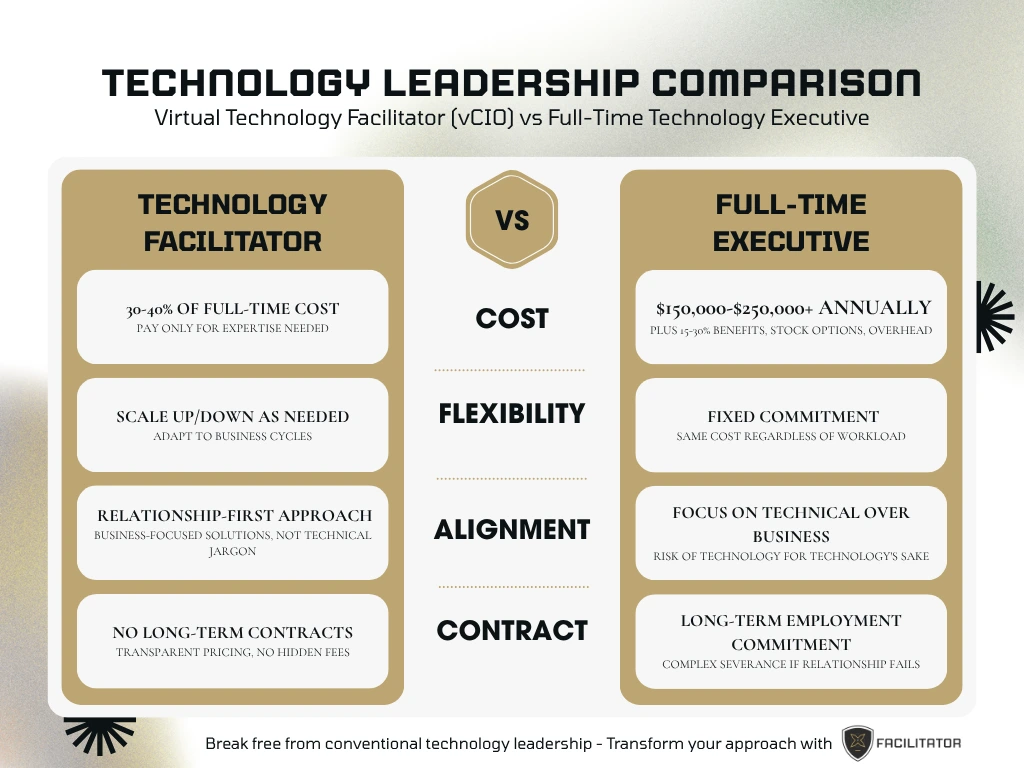
Bringing a full-time technology executive into your business isn't just a hire—it's a major financial commitment that goes far beyond the salary figure. While strong technical leadership is essential for growth, the conventional approach of a full-time CTO or IT Director might be holding your business back rather than propelling it forward.
For small businesses and growing enterprises in the $1M revenue range, a full-time technical hire often doesn't align with your actual needs or budget reality. Let's shatter the traditional model and explore why a Facilitator delivers what others can't.
What You're REALLY Paying For With Full-Time Technical Leadership
1. Recruitment & Hiring Costs That Demolish Your Budget
The real cost of acquiring top technology talent goes far beyond the posted salary:
Executive technology searches average $15,000+ in recruitment fees
3-6 months of searching while critical technical initiatives stall
Countless hours of your team's time spent interviewing candidates
2. Compensation That Extends Far Beyond Base Salary
Technology leadership doesn't come cheap:
Base salaries starting at $150,000-$250,000 annually
Benefits packages adding 15-30% to total compensation
Stock options and performance bonuses creating unpredictable expenses
Overhead costs for equipment, licenses, and workspace
3. Onboarding That Drains Resources
Getting a new technology leader up to speed isn't instant:
3-6 months of reduced productivity during knowledge transfer
Training costs that far exceed typical employee onboarding
Team disruption during transition periods
4. The Financial Disaster of a Poor Technology Hire
If your technology leader doesn't work out:
Financial impact averaging 30% of their first-year earnings
Cultural disruption that can derail your entire technology team
Critical projects abandoned or delayed during transition
Competitive advantages lost to market rivals
Transform Your Approach With a Technology Facilitator
WILDCARD's model obliterates these conventional constraints:
1. Cost-Effectiveness That Creates Freedom
Access senior-level technology expertise at 30-40% the cost of a full-time hire
Pay only for the expertise you need, when you need it
Eliminate expensive benefits packages and long-term commitments
Zero recruitment fees or lengthy hiring processes
2. Flexibility That Adapts to Your Business Reality
Scale engagement up during critical technology initiatives
Reduce hours during maintenance periods
Change focus areas as your business evolves without hiring multiple specialists
Terminate without the complexity of executive severance
3. Immediate Impact That Accelerates Your Business
Start within days, not months
Leverage pre-established frameworks and methodologies
Benefit from cross-industry insights and experience
Implement proven technology strategies from day one
4. Reduced Risk That Protects Your Business
No long-term commitment if needs change
Try before you commit to a longer engagement
Ensure cultural and strategic alignment without permanent commitment
Minimize the financial impact of a potential mismatch
The WILDCARD Advantage: Technology Leadership With Character
We mentor your existing staff, building capability from within
Implement systems and best practices that remain after engagement ends
Develop documentation and playbooks for sustainable growth
Create self-sufficient teams rather than dependency
2. Cross-Industry Insights That Drive Innovation
Benefit from technology insights across multiple industries and sectors
Apply proven solutions from diverse business environments
Avoid common pitfalls through exposure to varied technology challenges
Implement best practices tested across multiple organizations
3. Relationship-First Technology Leadership
Build a genuine relationship with a dedicated Technology Facilitator
Experience hospitality-driven technology guidance
Receive business-focused solutions, not technical jargon
Transform technology from cost center to competitive advantage
Lock IT Down Today With a Virtual Technology Facilitator
For small and mid-sized businesses looking to transform their technology approach, WILDCARD's Virtual Technology Facilitator model creates freedom through technology, not from it. Our approach delivers:
Enterprise-level technology expertise with zero minimums
Transparent pricing with no hidden fees or long-term contracts
Dedicated Facilitator who builds a relationship with your business
Complete visibility into your technology ecosystem within one quarter
Transform your technology leadership approach today. Connect with a Virtual Technology Facilitator who brings character to your technology strategy while delivering what others can't.
Break free from conventional technology leadership. Drive IT forward.


.png)
.png)
.png)